
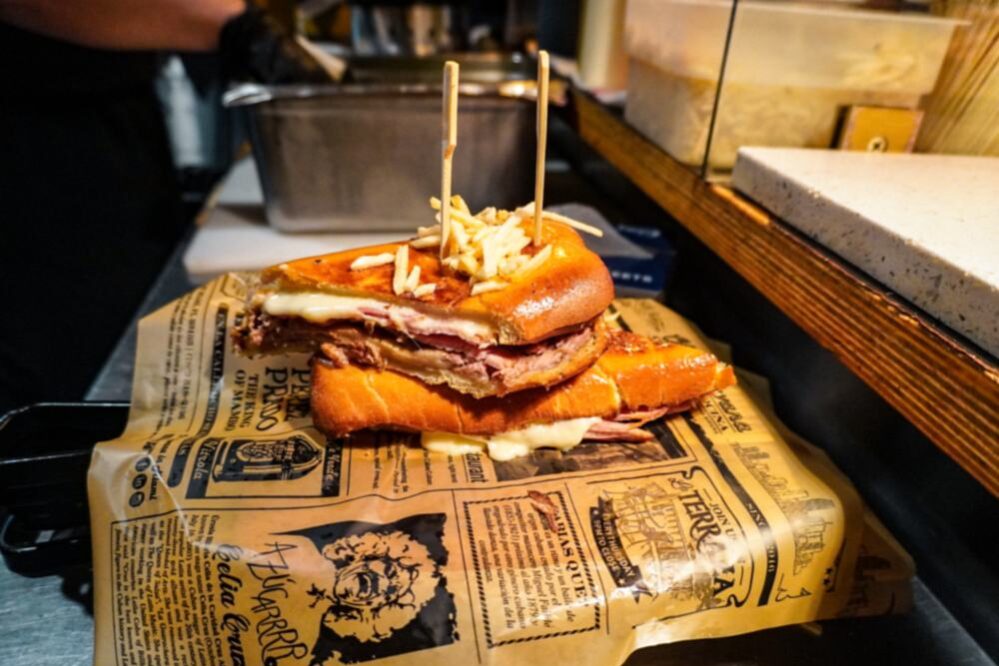
Quick answer: The Cuban sandwich traces back to Cuba’s mixto, was standardized in Tampa’s Ybor City in the early 1900s (with salami, thanks to that city’s Italian immigrant community), and took on its now-famous Miami form, no salami, after the wave of Cuban exiles who settled in Little Havana following the 1959 revolution. Today, Little Havana’s best-known versions come from long-running spots along Calle Ocho, including Old’s Havana Cuban Bar & Cocina, whose pressed Cubano is one of the most-reviewed in the neighborhood.
Where the Cuban sandwich actually comes from
The Cuban sandwich’s story has two homes, and both are real.
Cuba, late 1800s. Street vendors sold a version called the mixto: roast pork, ham, pickles, cheese and mustard on Cuban bread. It’s the direct ancestor of the sandwich, but not yet the dish Americans know by that name.
Tampa’s Ybor City, early 1900s. At the turn of the century, Ybor City was a booming cigar-industry neighborhood built by immigrants from Cuba, Spain, Italy, Germany and beyond. Cigar factory workers needed cheap, filling, portable food, and the sandwich that emerged pulled from all of those communities at once. The addition that makes the Tampa version distinct, Genoa salami, is generally credited to the neighborhood’s Italian immigrant population. La Segunda Bakery, still baking the same pan de agua Cuban bread since 1915, and Columbia Restaurant, using the same sandwich recipe since 1915, are two of the oldest continuous threads connecting today’s sandwich to that era.
Miami, post-1959. When Cuban exiles fled the revolution and settled heavily in what became Little Havana, the neighborhood built its own version of the sandwich, nearly identical to Tampa’s, minus the salami. That’s the defining difference between the two regional styles today:
| Tampa Cuban | Miami Cuban | |
|---|---|---|
| Ham | Yes | Yes |
| Roast pork | Yes | Yes |
| Swiss cheese | Yes | Yes |
| Pickles & mustard | Yes | Yes |
| Genoa salami | Yes | No |
| Bread | Often scored with a palmetto leaf | Plain pressed Cuban bread |
Little Havana’s version is the one most visitors picture when they say “Cuban sandwich,” and it’s the one you’ll find on nearly every menu along Calle Ocho.
What makes a great Cuban sandwich
Regardless of which side of the Tampa/Miami debate you land on, a few things separate a great Cuban sandwich from an average one:
- The bread. Real Cuban bread has a thin, crackling crust and a soft, slightly airy crumb, it should shatter a little under the press, not just squash flat.
- The press. A proper plancha press compacts the sandwich into a thin, crisp, unified block. Under-pressed is doughy; over-pressed turns it into a cracker.
- The ratio. Ham, roast pork and cheese should be roughly balanced, not one ingredient drowning the rest, with just enough mustard and pickle to cut through the richness.
- The pork. Slow-roasted, well-seasoned mojo pork, not a generic deli substitute, is usually the giveaway of a sandwich made with care.
Where to find the best Cuban sandwich in Little Havana
Old’s Havana Cuban Bar & Cocina — 1442 SW 8th Street. A Calle Ocho institution built around a glossy, nostalgic take on pre-revolution Havana, black-and-white photographs, vintage memorabilia and live Cuban music on weekends. Its pressed Cubano, ham, roast pork and Swiss cheese with a notably crisp press, is one of the most consistently praised versions in the neighborhood, and the mojito menu makes it an easy lunch-into-happy-hour stop.
Versailles Restaurant — Often called the world’s most famous Cuban restaurant, Versailles has served Little Havana since 1971 and remains a reliable, classic version of the sandwich in a full-service diner setting, useful if you want a sit-down meal rather than a counter stop.
Sanguich de Miami — A newer, sandwich-focused spot that’s built a following specifically around doing the Cuban sandwich (and its variations) at a high level, worth seeking out if the sandwich itself, rather than the surrounding restaurant experience, is the point of your visit.
A neighborhood counter stop on a guided food tour — If you’d rather not guess which spot is having a good day, tasting a properly made Cuban sandwich is part of what you’ll get on our Little Havana food tour, alongside the other family-run counters that don’t always make the “best of” lists but are exactly what a local would point you toward.
Cuban sandwich vs. medianoche: what’s the difference?
Worth knowing before you order: the medianoche (“midnight sandwich”) uses the same fillings as a Cuban sandwich but on sweet, egg-based bread similar to a challah, giving it a softer texture and slightly sweeter finish. It’s named for its original role as a late-night snack for Havana’s cabaret crowd. If a menu offers both, ordering one of each is the easiest way to taste the difference for yourself.
FAQ
What’s the difference between a Tampa Cuban sandwich and a Miami Cuban sandwich?
The Tampa version includes Genoa salami, added by the city’s Italian immigrant community in Ybor City in the early 1900s. The Miami version, which developed after 1959, leaves the salami out.
Where did the Cuban sandwich originate?
Its direct ancestor, the mixto, comes from Cuba in the late 1800s. The sandwich as it’s known today was standardized in Tampa’s Ybor City in the early 1900s among cigar-factory immigrant communities, with Miami developing its own no-salami version after 1959.
What’s the best Cuban sandwich in Little Havana?
Old’s Havana Cuban Bar & Cocina (1442 SW 8th Street) is one of the most consistently reviewed versions on Calle Ocho, alongside longtime institution Versailles and sandwich specialist Sanguich de Miami.
What is a medianoche and how is it different from a Cuban sandwich?
Same fillings, different bread: the medianoche uses a sweeter, egg-based bread rather than the pressed Cuban loaf, giving it a softer texture.
Written by the Little Havana Tours team, who taste-test the neighborhood’s sandwich counters regularly, and who’ll happily point you to the best pressed Cubano on the block during our Little Havana food tour.